

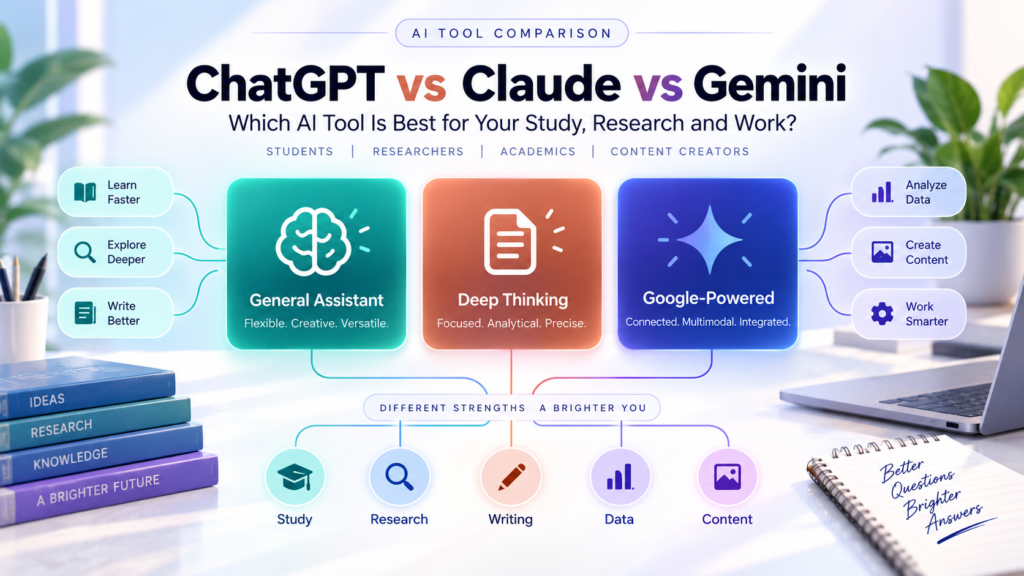
GPT-6 Astra prompts work best when they do more than ask the model to research, compare, or analyze. For complex work, the result improves when you clearly define the task, sources, expected output, boundaries, and review steps.
OpenAI describes GPT-6 Astra as its most capable model for difficult end-to-end work, including research, browsing, computer use, coding, and professional document creation. This guide focuses on a practical method: give Astra a structured brief, let it complete the workflow, and then review the important parts before relying on the result.
Where Can You Use GPT-6 Astra?
As of September 2026, ChatGPT Plus includes GPT-6 Astra in ChatGPT Work and Codex. OpenAI also offers GPT-6 Pro, powered by Astra, in ChatGPT on eligible Pro, Business, and Enterprise plans. Availability can vary by account and rollout stage, so check the current OpenAI Work and Codex guidance before relying on a specific access path.
A Simple Framework for GPT-6 Astra Prompts
Use five parts: Task + Sources + Output + Boundaries + Review.
- Task: What exactly should Astra do?
- Sources: What information is it allowed to use?
- Output: What should the final deliverable look like?
- Boundaries: What must it avoid changing, assuming, or inventing?
- Review: What should it verify before finishing?
Prompt 1: Research and Compare Three AI Tools
Use case: comparing current tools for students, researchers, or creators.
Research and compare [Tool 1], [Tool 2], and [Tool 3].

Use official product pages, documentation, and help centers first.

Compare:
- Main purpose
- Current core features
- Best use cases
- Strengths
- Important limitations
- Availability or plan restrictions that materially affect use

Output:
1. A concise comparison table.
2. A recommendation for a student, researcher, and content creator.
3. A section called “What I could not verify.”
4. Source links for every time-sensitive claim.

Do not invent features, prices, limits, or availability. If sources conflict, explain the conflict.

Before finishing, re-check every current feature and availability claim against its source.
Why it works: the prompt forces source quality, comparison criteria, uncertainty reporting, and a final verification pass instead of producing a generic list.
Practical Example 1: Comparing ChatGPT, Claude, and Gemini
Tested on September 13, 2026. To test Astra in a realistic research task, I asked it to compare ChatGPT, Claude, and Gemini for students, researchers, academics, and content creators. Instead of giving a short opinion, Astra produced a structured comparison table, practical recommendations, key limitations, and a “What I Could Not Verify” section. This is useful because it shows not only the answer, but also the boundaries of the answer.
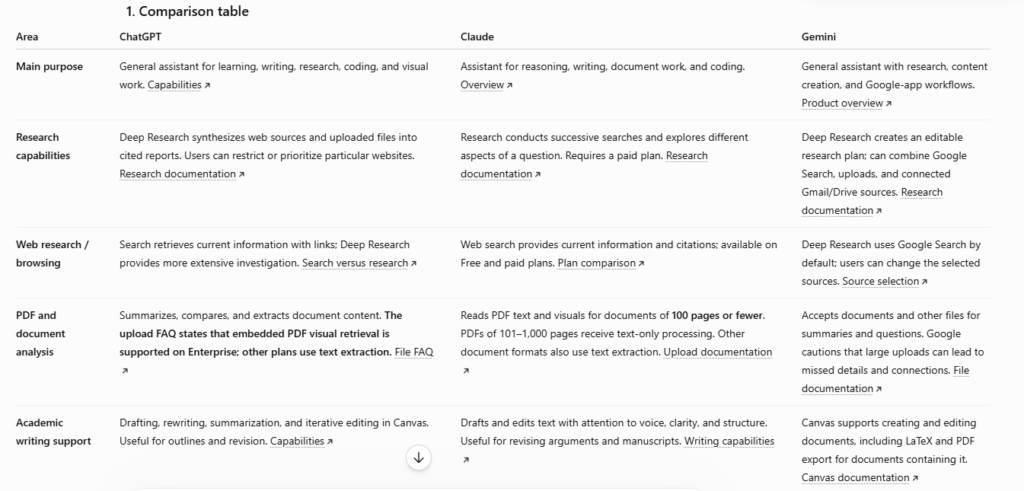
Why this result matters: the comparison turns a broad question into a structured decision aid that readers can scan quickly.
Prompt Used
Act as an AI research assistant.
Compare ChatGPT, Claude, and Gemini for practical use by:
- university students
- postgraduate researchers
- academics
- content creators
Requirements:
- Use official product pages and documentation where possible.
- Compare them in a structured table.
- Cover research capabilities, web browsing, PDF/document analysis, academic writing support, data analysis, image/file support, coding capabilities, best use cases, and key limitations.
- Include a section on free vs paid differences.
- Add recommendations by audience.
- Include a final section titled “What I Could Not Verify”.
- Make clear where conclusions are judgments rather than measured rankings.
Prompt 2: Analyze a CSV Without Changing the Original
Use case: research datasets, survey exports, or business data.
Analyze the CSV file I provide.

1. Inspect the dataset structure.
2. Identify missing values, duplicates, suspicious values, and obvious data-quality problems.
3. Summarize the main descriptive patterns.
4. Create two clear charts that reveal useful patterns.
5. Write a one-page report explaining the most important findings.

Output:
- Data-quality summary
- Key descriptive statistics
- Two clearly labeled charts
- One-page findings report
- “Assumptions and Limitations” section

Do not modify or overwrite the original file. Do not silently remove rows or replace missing values. Recommend cleaning steps before applying them.

Before finishing, verify calculations, labels, units, totals, and whether each conclusion is supported by the data.
How to use it: add the study context and explain what each variable means. This reduces the risk of a technically correct calculation being interpreted incorrectly.
Practical Example 2: Analyzing a Sample CSV
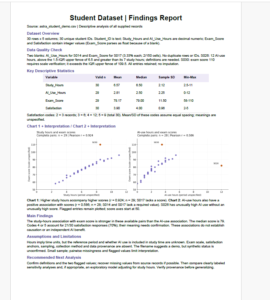
For this test, I uploaded a synthetic demonstration dataset with 30 student records and five columns: Student_ID, Study_Hours, AI_Use_Hours, Exam_Score, and Satisfaction. The sample intentionally included two missing values and two unusual values so the workflow could demonstrate data-quality checking rather than only descriptive statistics.
Astra identified the missing values, flagged the unusual AI-use value and exam score, calculated descriptive statistics, created two charts, and generated a one-page PDF findings report. Just as importantly, it kept the original CSV unchanged and stated assumptions and limitations instead of silently cleaning the data.
Practical lesson: the file is part of the prompt workflow. When the task depends on data, upload the dataset and explain the variables, units, and study context before trusting the interpretation.
Prompt 3: Turn One Research Topic Into a Complete Content Package
Use case: researchers and educators who want to communicate one topic across an article, video, and social media.
Turn the research topic below into a coordinated educational content package.

TOPIC:
[Insert topic]

AUDIENCE:
University students, postgraduate students, researchers, and academics.

OUTPUT:
1. A 1,200–1,500 word article outline with H2 and H3 headings.
2. A 60–90 second educational video script.
3. A 7-slide Instagram carousel outline.
4. A LinkedIn post.
5. Five FAQ questions for the article.
6. Three internal-link ideas for related future articles.

SOURCES:
Use the research material I provide. If current external facts are needed, use reliable primary or official sources and cite them.

BOUNDARIES:
Do not invent academic references, statistics, study results, or quotations. Clearly label any claim that still needs verification. Do not copy the same text across every platform; adapt the format and tone.

REVIEW:
Before finishing, check that every factual claim is supported, the language is understandable to the audience, and all formats communicate the same core idea.
Why it works: one reliable source package becomes several coordinated outputs without turning every platform into a copy-paste version of the same text.
Bonus: A Reusable Astra Brief
If you do not want to write a long prompt every time, start with this template:
GOAL:
What I want to achieve.

CONTEXT:
What Astra needs to know about the project.

SOURCES:
Files, websites, documents, or data it should use.

CONSTRAINTS:
What it must not change, assume, publish, or invent.

REQUIRED OUTPUT:
Exactly what I want delivered and in what format.

VERIFICATION RULE:
What Astra must check before presenting the final result.
This structure works for research, content creation, data analysis, website work, documents, spreadsheets, and other multi-step assignments.
Common Mistakes When Using GPT-6 Astra
The first mistake is giving a complex model a vague instruction such as “research this topic.” A stronger model can complete more steps, but it still needs to know what success looks like.
The second mistake is allowing the model to choose its own sources when source quality matters. For academic or business work, define the source hierarchy in advance.
The third mistake is skipping human review. Calculations, chart labels, conclusions, citations, interpretations, and any external actions should be checked before you rely on the result.
When Should You Use Astra?
Astra makes the most sense when a task contains multiple connected steps: research plus synthesis, data plus reporting, browsing plus comparison, coding plus verification, or content planning plus finished deliverables.
For a simple question, a lighter model may be faster. For a workflow that would normally require several tools or repeated prompts, Astra becomes much more valuable.
Final Thoughts
The biggest advantage of GPT-6 Astra is not that it can produce longer answers. It is that it can take a well-defined task through several stages while preserving the goal and constraints.
The practical lesson is simple: do not give Astra only a question. Give it a brief.
Task + Sources + Output + Boundaries + Review is a useful starting framework for building reliable GPT-6 Astra prompts for research and professional work.
Official Resources
Related reading: Google Flow AI Video Creation: From Fast Drafts to High-Quality Output